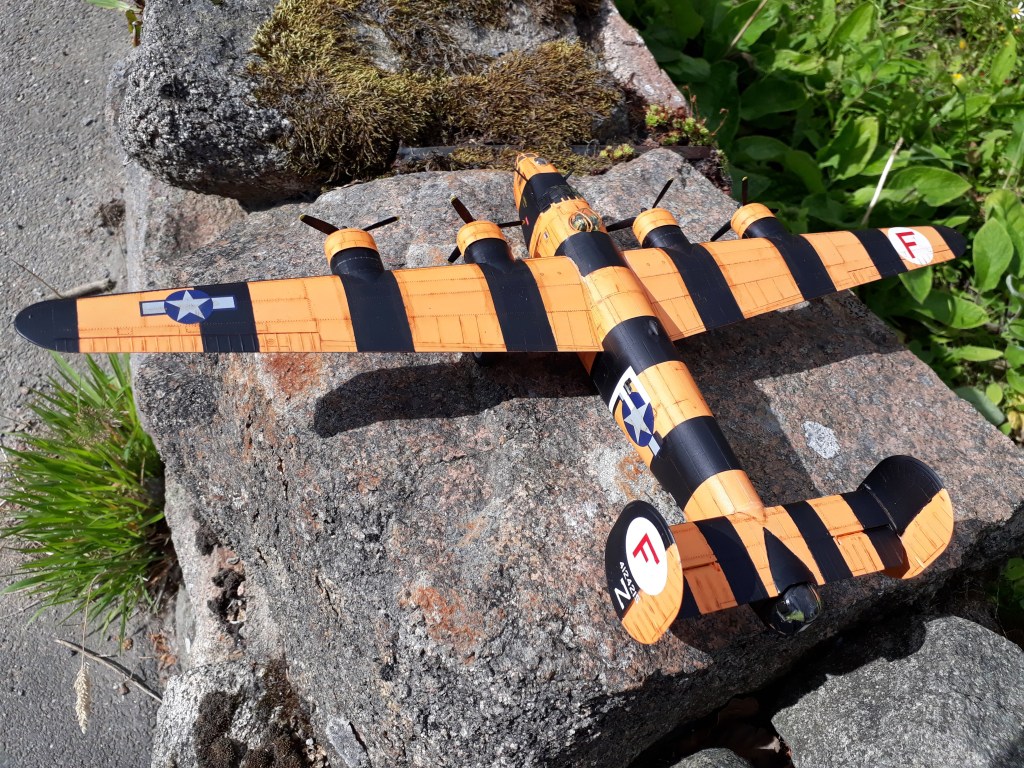
My father Gordon took 2 very different approaches to my model making. In the very early days I could only make “real” aircraft. In his view this meant piston engined aircraft from World War 2, preferably British but this was not compulsory. As a young child I didn’t have any input at all, besides not having the money to do the pruchasing myself. As I got older, armed with pocket money earnt by getting good grades at school, I asserted my right to build fast jets. To be honest this was because at the time they were easier to build and much easier to paint, the early ones being natural metal which back then meant slopping silver all over. My father then took a different approach, this was to provide unusual subjects for birthdays and Christmas. I remember the Starship Enterprise, a cut-away submarine, the Japanese battleship Nagato. In his own bulds Dad was very drawn to strange colour schemes, the more outlandish the better.
When I got back into the hobby, and my skill set had improved, I decided that I should build something to honour the memory of the man who got me into all this. It couldn’t just be any old build, it had to conform to the parameters set by him back in the early days, it had to be a “real” aircraft in the “real” scale of 1/72, an unusual subject and be brightly coloured. I also wanted to make him laugh.
There was a short lived fad in modelling groups on Facebook for pictures of Formation Ships. These were war weary bombers that were brightly painted so they were easily visible. Their purpose was to act as a rallying point for the main bomber stream to form up before heading out to Europe en masse. Once done, they returned to base. I had noted that whilst many contributors were happy to share photographs not many were prepared to build. I couldn’t ignore this, and bought Italeri’s old B-24. I also bought an aftermarket decal sheet from the US which had quite a few options. Armed with this I built Lemon Drop.

It wasn’t a particularly good kit, and I didn’t make a good job of it. I knew however that when my skills got better, the Hasegawa kit was out there. Sure enough I was able to get a good deal on one from Kit Krazy in Bexleyheath.
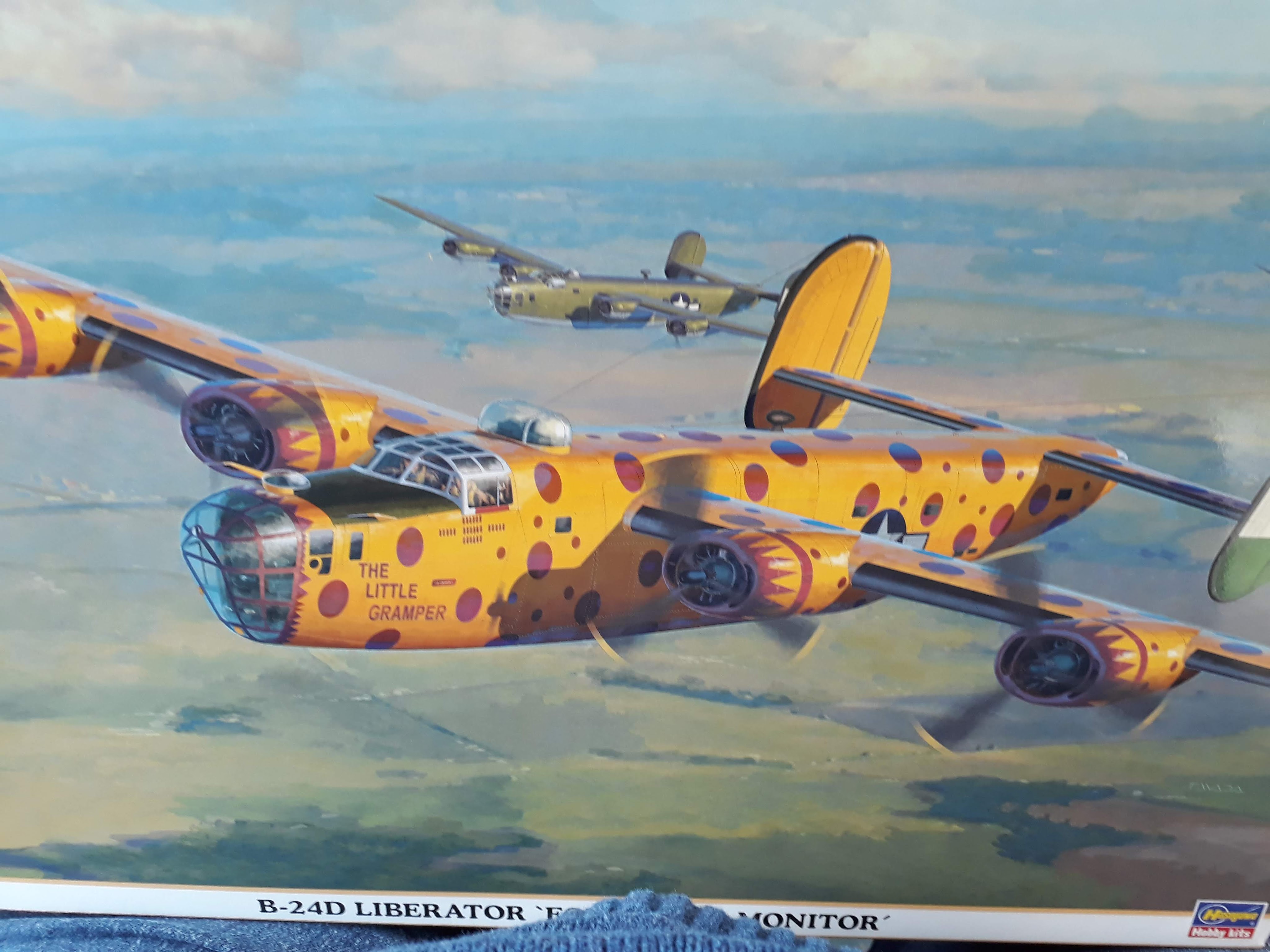
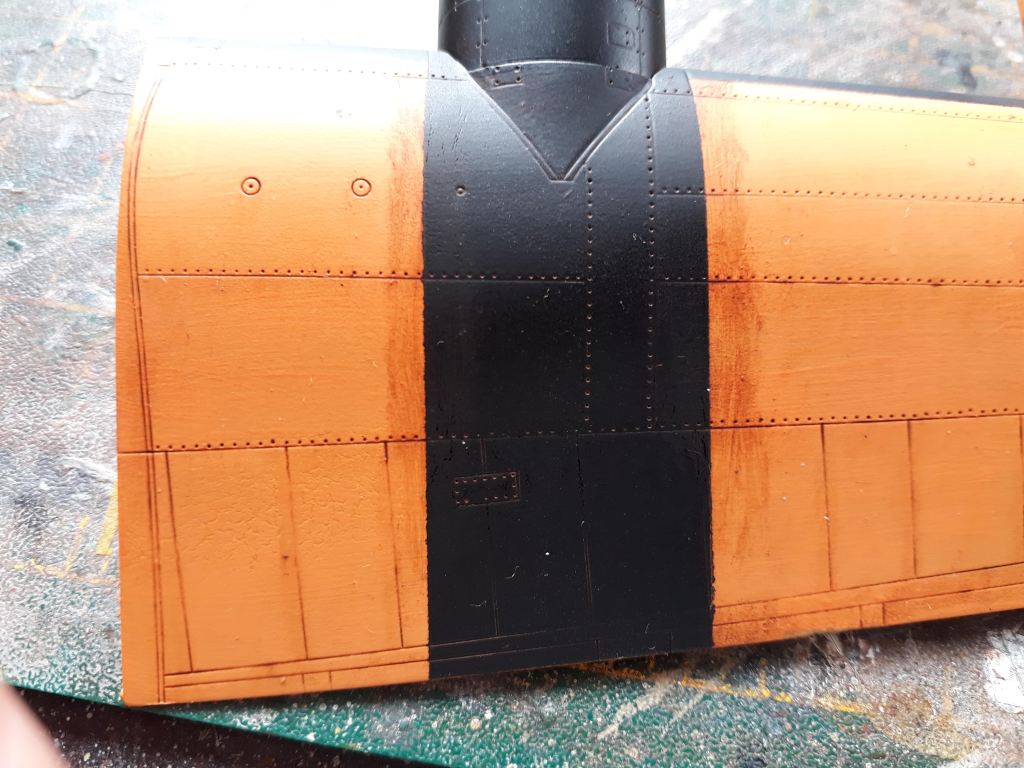
The right kit for the project to honour Dad. In my aftermarket decals, there were markings for “Lucky Gordon”. The kit went together very well. By this stage I was beginning to mix my own washes by using artists oils and white spirit, and was able to make just what I need to go with the orange and off-black scheme.
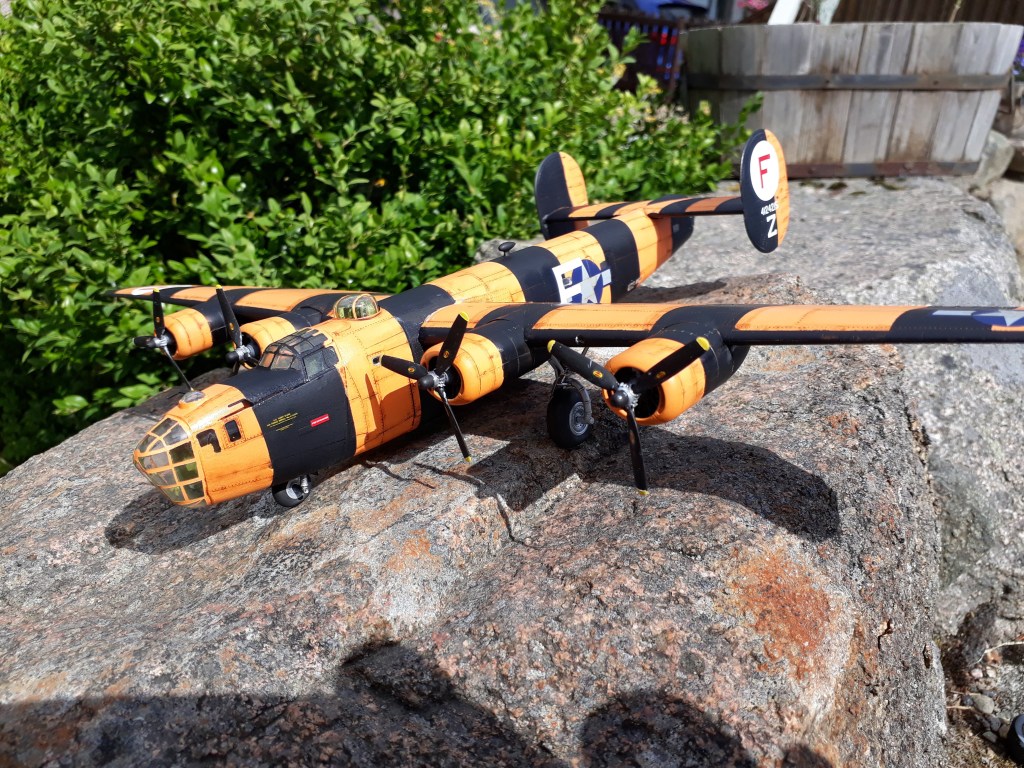
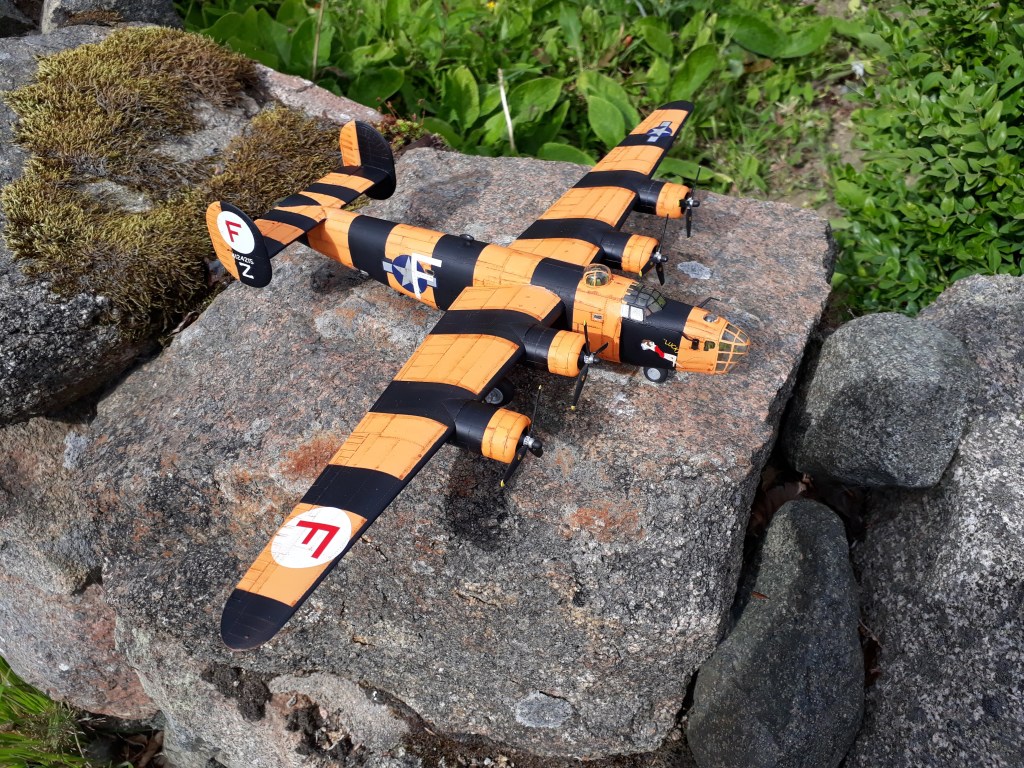
I know Dad would have approved, he would have laughed and he would have known his patience, guidance and enthusiasm were worth the effort. I felt his presence the whole time during the build. “Lucky Gordon” built for the man whose spirit imbues the shed of beer and plastic.


 The Shed of Beer and Plastic
Leave a comment